When you first walked into the conference, what stood out to you? Did anything differ from your expectations?
I’ve been to this conference many times before, so I knew to expect a very tech-forward, innovative and bustling event. What stood out to me this year was how honest and forthcoming the narrative was about what’s still not working across our sector. Almost everyone I spoke with has an enormous amount of data, particularly through ERP systems or digital logbooks, but very few are doing anything meaningful with it.
Another big surprise was how many organisations are still relying on outdated, deprecated systems. One of the delegates put it plainly: data standards and compatibility remain a huge problem. It confirmed that the industry knows where it needs to go, but the journey’s only just beginning.
The keynote focused on Singapore’s digital maritime vision, “moving from platforms to impact.” Can you tell us more about what was discussed?
Two things. Firstly, Singapore’s clarity about interoperability as a foundation for innovation. As more stakeholders adopt AI, automation, and remote operations, the ecosystem only works if data can move cleanly and securely between systems.
Secondly, was the idea that digital transformation has to translate into real operational outcomes. This really resonated with me as this is Ceto’s mission. Owners don’t need another dashboard; they need tools that help them operate more efficiently, safely, and predictably. The whole conference reinforced that we’re focused on the right problems.
There was a major focus on AI for operational resilience. Did any ideas in that session seem particularly promising or realistic?
Oh for sure. The predictive approach really caught my attention. Conversations focused on integrating port data, AIS, weather, and even news feeds to anticipate congestion or disruption before it happens.
But I still think there’s a very fine balance to strike. Yes, that’s the direction the industry is heading, but we’re seeing a huge increase in CCTV onboard and tech aimed at “situational awareness,” yet some of it risks adding noise rather than clarity.
Ultimately, you can’t replace the first principles of navigation. AI should enhance decision-making, not overshadow it. And with crew already drowning in paperwork, any new technology must reduce administrative burden, not add to it.
From crew welfare challenges to the seafarer shortage, this year’s discussions showed how connected yet disconnected the industry is. What stood out most?
The paradox really hit me: the world is the most connected it’s ever been — and yet the most disconnected. Crew welfare is a perfect example. Owners are investing in better facilities and entertainment onboard, but crew are spending more time than ever isolated in their cabins.
We also can’t ignore the shortage of qualified seafarers. Are we doing enough to inspire the next generation? I’m not convinced. The industry needs to think seriously about what the future seafaring career looks like and how digital tools can support people, not replace them.
Interoperability and data sharing are foundational themes for the autonomous and digital future. How do you see Ceto setting the standard?
For me, trust sits at the core of all of this - trust in the data, in governance, in how AI is applied. At Ceto, we’ve already demonstrated that you can build systems that are transparent, secure, and interoperable by design, which is important because so much of maritime still operates in silos. Even large operators are using ERP platforms that could unlock far more value if the underlying data were standardised and connected.
If we can show that integration is truly possible and beneficial, we can help shift the whole sector forward. For me, this is the missing part.
The decarbonisation sessions focused on practical, real-world solutions. As Ceto offers a product that directly speaks to this, what stood out?
What struck me most was the realism. Decarbonisation is essential, but I’m not sure it keeps shipowners up at night in the way many imagine. The overwhelming majority of the global order book, over 90%, is still conventional ICE propulsion. Even “methanol-ready” vessels require an additional $3 to $5 million before they can actually use methanol.
Owners absolutely care about emissions, but operational uptime and commercial performance are still the priority. That means voyage optimisation, hull efficiency, and integrated operational data are the levers that get traction today, because they improve both environmental and commercial outcomes. This is why we developedWatchkeeperas it directly helps tackle this challenge.
With collaboration and standardisation emerging as major themes, what did the discussions reveal about the industry’s push toward interoperable, insight-driven systems?
The conversations around standardised data frameworks made it clear that operators want more value from the systems they already use. Many have the data but not the insight, and that gap is holding back progress.
There is an industry-wide consensus that interoperability is the only viable path forward. As automation and AI become more embedded in operations, someone needs to take the lead in creating operationally practical, trusted, and integrated approaches. That’s where we see real opportunity for the sector as a whole.
Finally, what are your top five takeaways from SMN Singapore 2025?
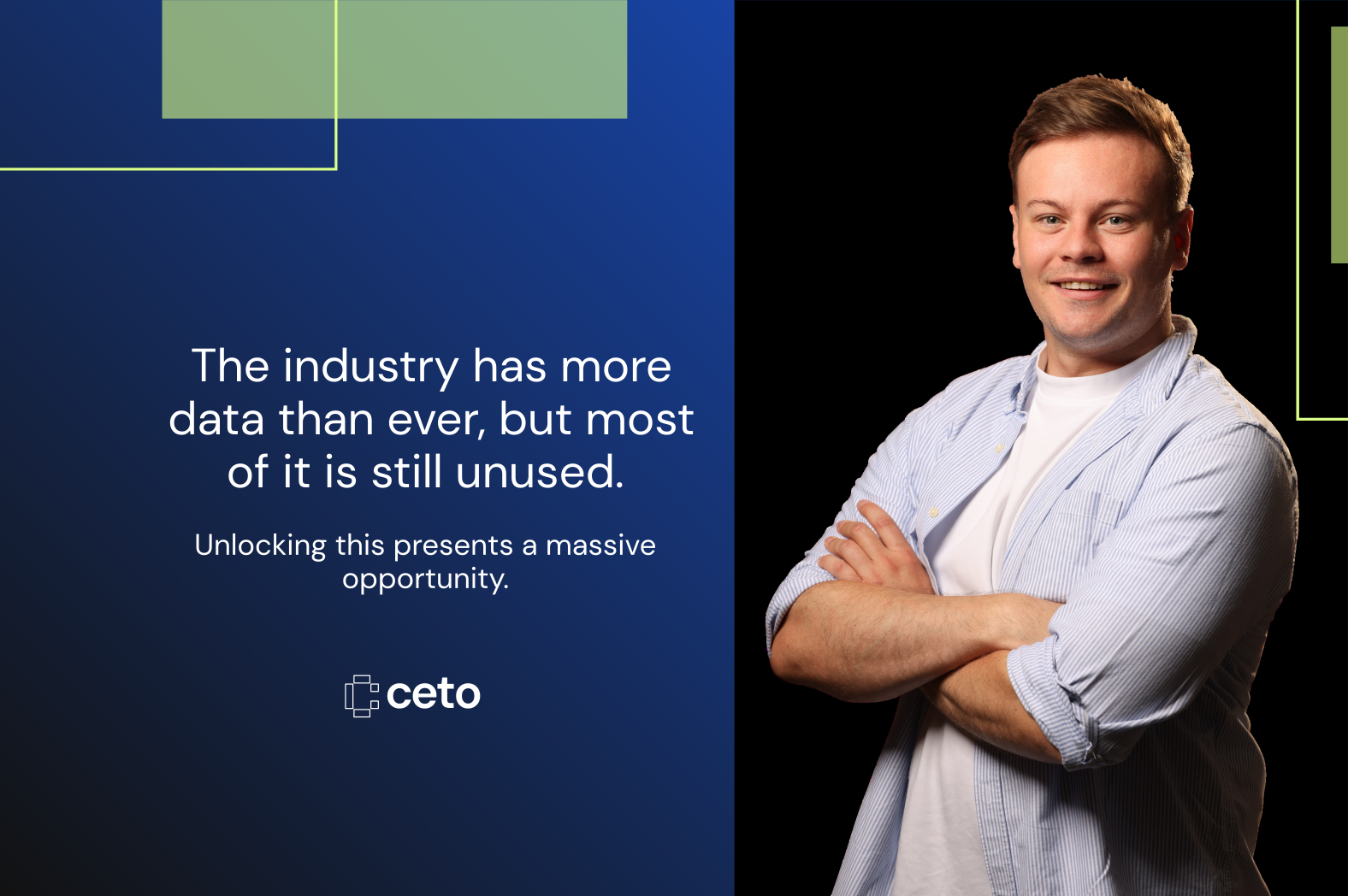
1. The industry has more data than ever, but most of it is still unused. Unlocking that is a massive opportunity.
2. Crew welfare and administrative overload are becoming critical issues. Digital tools must simplify, not complicate, life onboard.
3. Interoperability is the biggest barrier, and the biggest differentiator. Open, connected systems will define the leaders.
4. Decarbonisation must be framed in commercial and operational terms to drive real adoption.
5. Technology must enhance situational awareness, not hinder it. Fundamentals matter. They always have and they always will.